
"Victoria Co-op"
800 article(s) found
A brief introduction to the description of the flavor, taste and aroma characteristics of fine Burundian coffee beans with mellow taste
Burundian coffee market: most of Burundi's coffee products are exported to the United States, Germany, Finland and Japan. Lake Tanganyika is longitudinally striped from north to south, 670km long and only 48-70km wide from east to west. It is the narrowest lake in the world, with a surface area of about 32900 square kilometers. It is the second largest lake in Africa (the largest lake is Lake Victoria L.Victoria), with an elevation of the lake.

Full-bodied bitter coffee manor producing area flavor and taste characteristics of high-quality coffee beans
The types of rainfall can be divided into bimodal distribution and unimodal distribution. The areas with double bee rainfall include the provinces around the Lake Victoria basin, the northeast highlands, the coastal and inland northeastern. The bimodal rainfall area is characterized by two rainy seasons. The short rainy season occurs from September to December. The total rainfall can reach 200-500 mm. The long rainy season occurs from March to May.

Characteristics of taste and flavor of Ugandan coffee taste by grinding scale treatment
The taste and flavor of Ugandan coffee is located between the east and west branches of the East African Rift Valley, tilting gently from west to middle and low and flat in the south. Margarita Peak is 5109 meters above sea level, which is the highest in the country. There are many rivers and lakes and a large water area, so Uganda is known as a plateau water village and a pearl in East Africa. Lake Victoria is the second largest freshwater lake in the world and the largest in Africa, accounting for Uganda.

Uganda coffee producing countries with the highest production in Africa introduce Uganda's boutique coffee beans
Uganda's coffee production ranks first in Africa, accounting for more than 70% of its total exports. Uganda is also the hometown and main producing area of Robes specialty coffee. In the 1960s, Ugandan coffee production remained at 3.5 million bags a year. By the mid-1980s, coffee production had dropped to 2.5 million bags a year, mainly for political reasons. But now coffee production is on the rise again, which is large at present.

Is the coffee good in Bali Bamboo Cooperative in Kenya? taste characteristics of coffee in Bali Bamboo Cooperative in Kenya
Professional coffee knowledge exchange more coffee bean information please follow the coffee workshop (Wechat official account cafe_style) KENYA BARICHU Orange blossom florals with Meyer lemon and black cherry notes. Orange blossom with lemon and black cherry aromas. Geography: Kenya map image in Neri County, Kenya, in central Kenya, Barichu

Peaceful and full-bodied coffee manor in Arusha, Tanzania, the planting market price of fine coffee bean varieties is simple.
Raw beans: raw beans are unbaked beans, which contain 11.5% fat; 11.5% moisture; 28.6% crude fiber; 4.0% minerals; 6.2% tannic acid; 1.3% caffeine; 17.0% essence; 8.1% sugar; 11.8% protein. Baked beans: baked beans containing 13.0% fat; 1.5% caffeine; 29.5% crude fiber; 2.6% moisture; 5.0% minerals

Flavor characteristics of Yega Shefiwoka Description of Woka Cooperative
Washed Ethiopia can reach the highest grade of G1, which is very rare. This bean comes from a single farm in Ethiopia and is processed by Worka cooperative. Alemayehu Alako Farm is a member of the Waka Cooperative. Woka Cooperative is located in the south of Gedeb District. It was founded in 2005 and joined the famous Yejia Shefi Coffee Farmers Cooperative that year.

Flavor description of Costa Rican Red Kaddura washed Coffee beans introduction to the origin of grinding scale varieties
Costa Rican Red Kaddura washed Coffee Bean Flavor description Grinding scale Variety Origin introduction Costa Rica treatment method: solarization (San Isdro Manor Pillon treatment) production area: Tara bead level: SHB (1700 altitude) roasting: medium-shallow (burst dense) flavor: honey apple, banana, fruit Catuai raw beans compared with other high altitude raw beans
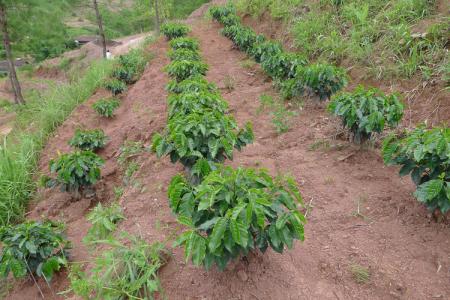
Costa Rica Red Kadura Washed Coffee Bean Grind Scale Taste Variety Introduction
Coffee was introduced to Costa Rica from Cuba in 1729, and today its coffee industry is one of the most well-organized in the world, producing up to 1700 kilograms per hectare. Costa Rica has a population of 3.5 million, but coffee trees number 400 million, and coffee exports account for 25% of the country's total exports.

Kenya coffee bean Neri Nyeri producing area Kenya Neri AA grade coffee bean flavor and taste description
Neri is a delightful town in the foothills of Aberdale with vast green meadows and gardens. The foothills are covered with dense eucalyptus forests, and the magnificent Mount Kenya can be seen in the northeast. Most of the surrounding areas are used for agriculture. Coffee and tea are important cash crops. Nyeri, NYERI District, is located in the highlands of central Kenya, in the Abadre Mountains.

Introduction to the method of taste treatment for grinding scale flavor description of red Kaddura washed coffee beans in Costa Rica
Costa Rican Red Kaddura Water washed Coffee beans Grinding scale Flavor description Taste treatment method Costa Rican treatment: solarization (San Isdro Manor Pillon treatment) production area: Tara beads level: SHB (1700 altitude) Baking: medium-shallow (explosion dense) Flavor: honey apples, bananas, fruits forgive me for talking so long, too long not to find a good taste
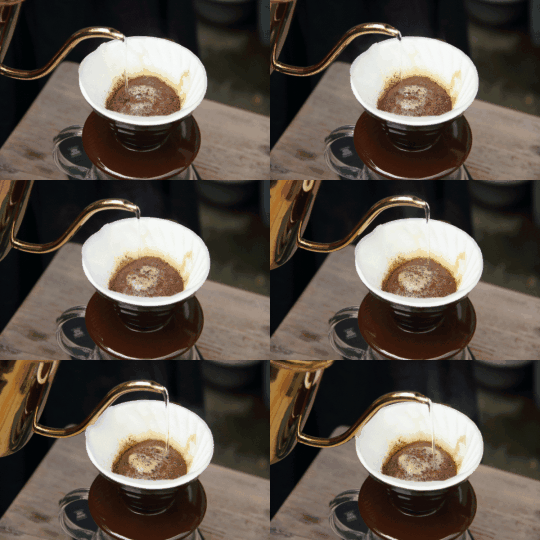
Uganda Coffee Flavor description Taste characteristics Grinding scale Fine Coffee beans
Uganda coffee flavor description, grinding scale, fine coffee beans introduce Uganda's coffee production ranks first in Africa, accounting for more than 70% of its total exports, while Uganda is also the hometown and main producing area of Robes specialty coffee. In the 1960s, Ugandan coffee production remained at 3.5 million bags a year. By the mid-1980s, coffee production had fallen to

Introduction to the flavor producing area of Fenghuang Manor in Costa Rica Coffee Manor
This time I got this suntan in Costa Rica, and the entrance calmed the whole person down. I drank her honey apple flavor, followed by banana and cream taste, similar to the taste of pipa and full cocoa tail rhyme. No matter how noisy the world is, I just want to sit down quietly and enjoy this cup of coffee. Just

Flavor classification characteristics of Ugandan coffee beans; description of taste and flavor; introduction to the production area of grinding scale
The taste classification characteristics of Ugandan coffee beans taste description grinding scale production area is located between the east and west branches of the East African Rift Valley, gently tilting from west to middle, low and flat in the south. Margarita Peak is 5109 meters above sea level, which is the highest in the country. There are many rivers and lakes and a large water area, so Uganda is known as a plateau water village and a pearl in East Africa. Lake Victoria is the second largest freshwater in the world and Africa.

Description of characteristic Flavor of Ugandan Coffee A brief introduction to the taste of Uganda Coffee produced by Grinding scale treatment
A brief introduction to the taste of Ugandan coffee by grinding scale treatment the country is located between the east and west branches of the East African Rift Valley, tilting gently from west to middle and low and flat in the south. Margarita Peak is 5109 meters above sea level, which is the highest in the country. There are many rivers and lakes and a large water area, so Uganda is known as a plateau water village and a pearl in East Africa. Lake Victoria is the second largest freshwater lake in the world and Africa.

Introduction of very fragrant Kenyan coffee beans with the fragrance of wine
Accounting for 55% of Kenya's total coffee production (40% of the number of estates) is run by numerous small operators. Seeing that coffee is absolutely profitable, these small operators continue to increase the need for agronomy and the development of high-quality coffee tree species, thus greatly promoting the development of coffee in Kenya. To ensure that only ripe coffee fruits are picked, people must be in the forest

Tanzania Coffee Bean introduces the geographical location of Tanzania
Location Map of Tanzania Tanzania covers an area of 945087 square kilometers, of which Zanzibar is 2657 square kilometers. It consists of the mainland, Zanzibar and more than 20 small islands. Located in eastern Africa and south of the equator, the continent is bounded by the Indian Ocean to the east, Zambia, Malawi and Mozambique to the south, Rwanda, Burundi and the Democratic Republic of the Congo to the west, and Kenny to the north

Demonstration of taste brewing in flavor producing area of Costa Rican Coffee Manor Fire Phoenix Manor
I have roughly counted that on average, for every new coffee bean released, at least 16 samples will be tested. Only when I encounter coffee that really makes me feel good, I am willing to share it with you. After choosing a raw bean as the release, I also have to test the baking degree, adjust the baking curve, cup test and determine the final flavor. Only in this way can we ensure that the coffee beans can be placed in every

Description of the Flavor of Ugandan Coffee introduction to the varieties treated in the manor area
Uganda coffee flavor description manor area treatment varieties Uganda's coffee production is among the highest in Africa, accounting for more than 70% of its total exports, while Uganda is also the hometown and main producing area of Robes specialty coffee. In the 1960s, Ugandan coffee production remained at 3.5 million bags a year. By the mid-1980s, coffee production had dropped to an annual rate, mainly for political reasons.

Brazilian coffee brand recommendation Santos and Santos coffee bean flavor characteristics of the difference
Professional coffee knowledge exchange More coffee bean information Please pay attention to coffee workshop (Weixin Official Accounts cafe_style) Although Brazilian coffee production reaches 30 to 35% of the world's total, ranking first in the world, no Brazilian bean can be called top coffee. Coffee trees are everywhere in the mountains, distributed in the south of Brazil, but only Santos can be moved to the table.